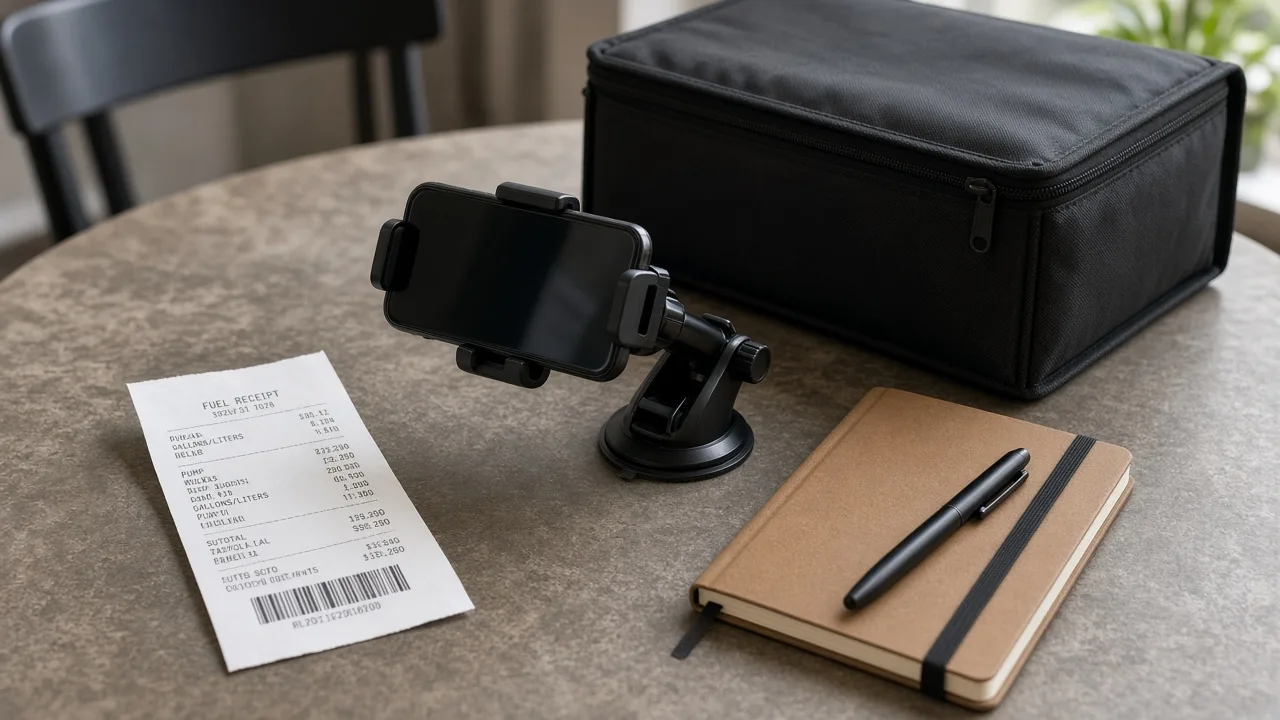
Is cash taken from the till an expense? What the books say in sole proprietorships and limited companies — plain and clear.
Friday evening. Cash leaves the till or the business account: groceries, school, rent, “just a need.” Monday message to the accountant: “I took cash from the till — book it as an expense?” The short drama ends; the long sentence begins. This piece calms that sentence: is a withdrawal an expense, what happens in a sole proprietorship, what changes in a limited company, why cash and bank drift apart.
In Ankara small offices, e-commerce and field files, the scene is familiar. The aim is not to scold; it is to put the money trail in the right place. General information only; for your file follow accounting and current rules. Light to read; serious in effect.
Short answer
No — money taken from the till or business account for you is not, by itself, an “expense.” An expense is a documented cost for the business (rent invoice, fuel, stock purchase…). Money that goes into your pocket is usually a drawing / owner–partner movement: assets fall, but an “expense” line does not appear automatically.
Good news: withdrawing money is not banned. Bad news: “book it as expense” muddies the books. A good setup records the drawing as a drawing; keeps the grocery slip separate; keeps documented business costs separate.

Why it feels like an “expense”
Because the feeling is the same: there was money in the till, now there isn’t. Feeling is not accounting. The books do not only ask “where did the money go?” — they ask “what kind of outflow is this?” You paid shop rent → expense (with a document). You paid a child’s school fee → your drawing. Both reduce cash; only one is an expense line.
The mix-up grows especially in sole proprietorships: “It’s all my money.” Fair — but tax and book language still separate the business from the personal pocket. If you don’t, year-end grows into “why is profit high / why doesn’t cash tie?” See the declaration calendar for tempo; follow GİB notices for the current frame.
In a limited / capital company the picture is sharper: company cash is not “the partner’s pocket.” Partner withdrawals run through loan / profit distribution / salary channels; “just book it as expense” is usually the wrong door.
| What you did | The feeling | Typical place in the books |
|---|---|---|
| Withdrawal for groceries / school / home rent | “Cost” | Drawing / current account — not expense |
| Shop rent (invoice) | Cost | Expense (documented) |
| Fuel for work (documented) | Cost | Expense |
| Cash out “somewhere” | Gone | Unexplained gap — risk |
| Salary / bonus (payroll) | Payment | Wage / SGK line |
Drawings in a sole proprietorship
In a sole trade, business profit links to your income — but every cash outflow is not an automatic deductible expense. A drawing moves value from the business to personal use. What reduces tax is not the drawing amount; it is documented, accepted business expenses and the tax-base calculation for the period.
Practical language: “I took 20k from the till” → tell your accountant “drawing,” not “expense.” If it was for the business, send the slip / e-document separately. An undocumented “I spent it for work” claim can be as weak as a screenshot.
If you are new, locking this split in month one saves the next eleven. Make “drawing ≠ expense” an internal rule with the first month as a new taxpayer.
What changes in a limited company / partnership?
The company is a legal person. If a partner empties the till as “my money,” you talk current-account debt, profit distribution rules and timing — not a magic “expense” wand. In partnerships, silent withdrawals also break trust: one partner draws, the other doesn’t know, month-end becomes a cash argument.
Partnership order needs a transparent current account and a written rule. On the sales side, “no invoice” pressure is a cousin risk — see They Asked for No Invoice.
What eats the most time in a drawing crisis
Not a measurement; time-loss order seen in Ankara office files.
Why cash and bank stop matching
Because three things mix: (1) drawings are not recorded, (2) cash sales stay incomplete, (3) personal cards / IBANs tangle with the business. Result: money seems to exist on a screen and not in the folder — or the reverse. The mismatch is not “the accountant doesn’t know”; the trail is missing.
The fix habit is simple: every drawing gets a short note + amount + date. “Groceries” is enough; no novel. If it is a business cost, PDF / slip into the folder the same day. In cash-heavy work (couriers, field), discipline matters more — courier accounting carries the same idea.
In e-commerce, payouts hit the bank; if you then drain cash / another card without labels, the trail still scatters. See e-commerce accounting.
A week’s story (not exaggerated)
Monday: till drawing, no note. Tuesday: “stuff for work.” Wednesday: ATM from the business account. Thursday: the accountant asks about the gap. Friday: “it was all expense” arrives; slips are missing or personal. By month-end the same hole has grown.
The break point is labelling while you draw. Say “drawing” in the first message; attach the business document if there is one. One rule helps small Ankara teams: “Personal outflow = drawing; business outflow = document.” Interns hear it; partners hear it.
A sentence we hear often: “It’s my money anyway.” In a sole trade that may feel true; book language still asks for the nature of the line. In a limited company that sentence often opens the wrong door.
The right flow: three steps
Step one — name the outflow. Drawing, business expense, or salary? Step two — if business expense, put the document the same day (PDF / slip). Step three — month folders and a short list: 2026-03-drawings separate from 2026-03-expenses. A chat “I sent it” archive is not enough alone.
Template message: “Today X TL drawing from till / bank (personal). No business expense / this PDF is the expense.” Clarity shortens the accountant’s “is it expense?” loop.
Don’t slide into undocumented paths under discount or cash pressure; that line is the same family of risk as a no-invoice offer. No document, weak expense claim.
Funny (and expensive) mistakes
First: treating every ATM as an expense. Second: stacking personal grocery slips in the business folder. Third: partners drawing without telling each other. Fourth: “we’ll fix it later” for three months. Fifth: calling a bank notification “the document.”
The common thread is speed mixed with embarrassment. Drawings are not shameful; wrong labels are expensive. Explaining 40 undocumented outflows at close costs more than a 40-line drawing list.
Another quiet error: high drawings + low formal pay / messy records, leaving the file to ask “how do you live?” Talking order early is cheaper than panicking later — with tax advisory when needed.
How to tell your accountant
One message: period + amount + “drawing” / “business expense + PDF.” Use the right word instead of “book expense”; a technical correction is not a personal attack. If you visit the office, bring a printout or USB; pin via our Google Maps listing.
In ongoing work, drawing and document flow get clear with you. The aim is not fear; it is Friday’s withdrawal landing on the right line on Monday morning.
One line to keep: I took cash from the till ≠ I booked an expense. A drawing concerns the pocket; an expense concerns the document. Businesses that split the two stop losing the cash–bank war at month-end.
Don’t read this as a ban list. Drawings are fine; needs are fine. The only change: every outflow has a name and — if business — a document. That small habit calms the books and the nerves together.
Frequently asked questions
Can I book till cash as an expense?
Not by itself. A personal drawing is not an expense. A documented business cost is assessed separately.
In a sole proprietorship isn’t it “all mine”?
Economically it may be yours; books and tax base still ask for the nature of the line. Split drawing and expense.
Is constant cash from a limited company a problem?
Company cash is not the partner’s pocket. Current account, distribution and salary channels must be set correctly; covering it as “expense” is wrong.
I spent it for work but have no slip?
Complete the document first. An undocumented claim stays risky; mark the file “missing.”
What if the cash–bank gap already piled up?
Sit with your accountant early; label movements. Don’t say “let’s hide it” — say early what can be fixed.
Do you build the drawing–expense rule together at the office?
Yes. In Kızılay or remotely; book via contact, pin via the map.
Final word
I took cash from the till — what happens? Your pocket fills; an expense line does not appear by magic. Used well, you label the drawing and keep the business document separate. Used badly, you spend month-end on “what is this outflow?”
As Ankara Muhasebeci, from our Kızılay office, we simplify the drawing–expense split: needs are fine, labels are serious. For a setup that fits your file, write for accounting or an introductory meeting.
Ask our advisor for an assessment tailored to your situation.